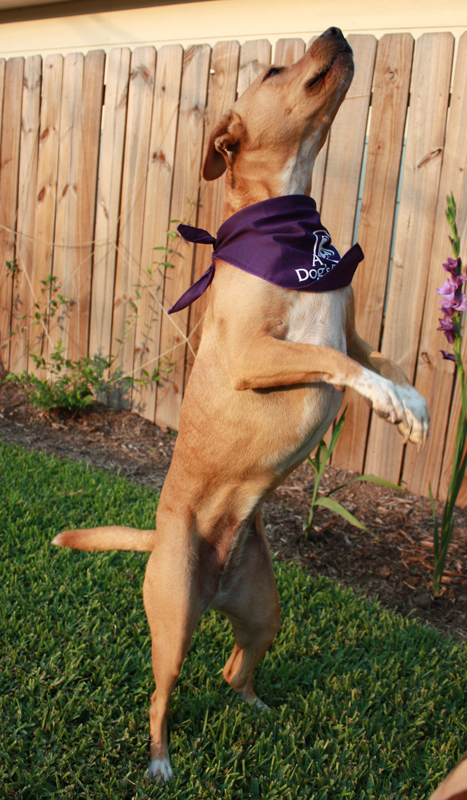
Sometimes our dogs embarrass us with their actions and we think
the best way to respond is to yell at our dog because 1) it’s a very natural
reaction us and 2) people around us will see that we’re handling the situation.
For instance, your dog is barking his fool head off while you’re on your walk because
he sees another dog across the street. You start shouting at him so he’ll calm
down. Now you both look like fools barking.
If you’re barking (yes, to your dog, shouting is barking) and
stressed, then your dog will be even more tense because he’s reacting to your
elevated response. He doesn’t know why you’re yelling, just that you’re yelling.
Set the example for him.
At first don’t even talk. Quickly remove you and your dog
from the stimulus. Then breathe. Take a moment for the both of you to calm
down.
I suggest carrying a fanny pack with you on your next walk.
You can store your keys, baggies, phone and most importantly, smelly treats. Dogs
use their nose for everything (recent research has indicated that dogs may remember
routes by the smell, not by visual clues), so the smellier the treat, the
better.
When you see the stimulus again that triggers your dog’s
reaction, remain calm (fake it if have to). Next, before your dog gets to that
threshold where he doesn’t hear you, either: place a treat in front of his nose; or call
his name, walk the opposite direction and reward him with the treat as soon as
he turns his head. If you think your dog can handle seeing the dog, then the
treat in front of the nose should get his attention and reward him with it.
Have another treat quickly available and keep this treat slot machine going
until the stimulus is gone.
If you think your dog’s reaction will escalate quickly just
upon seeing another dog, then use the walking opposite direction method. It’s
important that he sees the other dog (or whatever causes the reaction) first
and then immediately follow with the calling of name, turnaround and rewarding
for turning his head and paying attention to you. You have to be quick. Have
more treats ready to keep rewarding for paying attention to you and not the
stimulus.
The goal is to associate that stimulus with a new feeling,
pleasure. It doesn’t matter if it’s fear or aggressive based. Both emotions
look and sound very similar to most people. You want to condition him to stimulus
= good.
As long as you keep him under that threshold, you will be
making progress. If you let him get past that threshold, he isn’t capable of
making cognitive decisions. He will not be able to focus on you, no matter how
hard you try putting that treat in front of his nose. Plus, it may make matters
worse. He can shut down completely or transfer his irritation to you. Neither is
healthy.
By using these methods, it’ll be obvious to people that you
are working with your dog to improve the behavior. I can personally speak on
this level with one of our own dogs, Tristan. He was HIGHLY reactive on leash
to dogs not behind a gate/fence on walks in our neighborhood (notice how
specific it was). His was fear-based, but it sounded like he wanted to kill the
other dog; not, what he was really thinking, which was, “OMG! Get away from me!
Get away from me! You’re not getting away from me!! Why won’t you get away from
me?”
And his frenzied response would work because eventually the
other dog went away. But from his point of view the dog left the scene because
of his hysterical behavior, not because the other dog was leaving anyway. So he
was being rewarded for that response.
When my husband and I worked with him, people walking their
dogs were very encouraging. They would smile and say how well he’s doing and
what good boy he was. By us reacting calmly and encouragingly, people
reciprocated. With everyone in a relaxed manner, we were able to modify his
behavior with longer lasting results.
His “final exam” was when we encountered 2 small dogs
wandering the neighborhood. They came right up to him in a friendly,
non-threatening approach and he kept his focus on me the entire time. What a
good boy!! J
Oh, and did I mention that I was by myself with our 2 other dogs on this
encounter? It didn’t happen overnight, but with consistent training, he was
able to make new and better associations.
Remember, no one wins a shouting match. Remain calm and be
the example for your dog.